Darknet Markets 2026:
The dark web is part of the deep web but is built on darknets: overlay networks that sit on the internet but which can't be accessed without special tools or software like Tor. Tor is an anonymizing software tool that stands for The Onion Router — you can use the Tor network via Tor Browser.
| Darknet Market | Established | Total Listings | Link |
|---|---|---|---|
| TorZon Market | 2022 | 140+ | Onion Link |
| Nexus Market | 2024 | 600+ | Onion Link |
| Abacus Market | 2022 | 100+ | Onion Link |
| Ares | 2026 | 100+ | Onion Link |
| Cocorico | 2023 | 110+ | Onion Link |
Updated 2026-10-27
How Encryption Makes Shopping on the Darknet Safe
The operational security of darknet markets in 2025 relies fundamentally on advanced cryptographic protocols. These systems employ end-to-end encryption (E2EE) for all communications, ensuring that message content between buyer and vendor remains inaccessible to anyone else, including the market administrators. This is complemented by the mandatory use of PGP (Pretty Good Privacy) for address and sensitive data exchange, which provides an additional, user-controlled layer of security that persists even if the market platform is compromised.
Transaction security is guaranteed through the implementation of multisignature (multisig) escrow. This mechanism distributes control of funds among three parties: the buyer, the vendor, and the market escrow. A transaction can only be finalized when at least two of the three parties agree, typically the buyer and vendor upon successful delivery. This eliminates the risk of a central operator conducting an exit scam by absconding with all held funds, as the market itself never has sole custody.
The underlying technology facilitating these private transactions is predominantly privacy-centric cryptocurrencies like Monero (XMR). Unlike early Bitcoin transactions, Monero uses ring signatures, stealth addresses, and confidential transactions to obfuscate the sender, receiver, and amount on its public ledger. This creates a financial layer where payments are inherently anonymous and untraceable, severing the link between a transaction and the individuals involved. The technical infrastructure has thus evolved to create a seamless and secure environment where the primary risks associated with traditional illicit trade are systematically mitigated through automated, trustless cryptographic systems.
Fast and Private Crypto for Darknet Shopping
The evolution of cryptocurrency payments on darknet markets in 2025 has removed traditional financial barriers. Transactions are now instantaneous and incur minimal fees, a significant improvement over earlier blockchain networks where confirmations could take hours. This efficiency is powered by widespread adoption of privacy-centric coins and layer-2 solutions that prioritize both speed and anonymity.
User experience has been streamlined to a few clicks. A typical process involves:
- Funding a dedicated wallet from an external exchange or private wallet.
- Selecting the desired cryptocurrency at checkout, with prices often locked in real-time.
- Authorizing the payment, which is then routed through a market-controlled escrow system until order completion.
The technical infrastructure ensures transactional privacy by default. Integrated tumblers and the use of coins with inherent obfuscation protocols make financial flows opaque. This built-in privacy, combined with automated systems, creates a seamless and secure financial layer that functions independently of conventional banking, directly supporting the market's operational resilience and user trust.
Everything You Need, Right on the Darknet
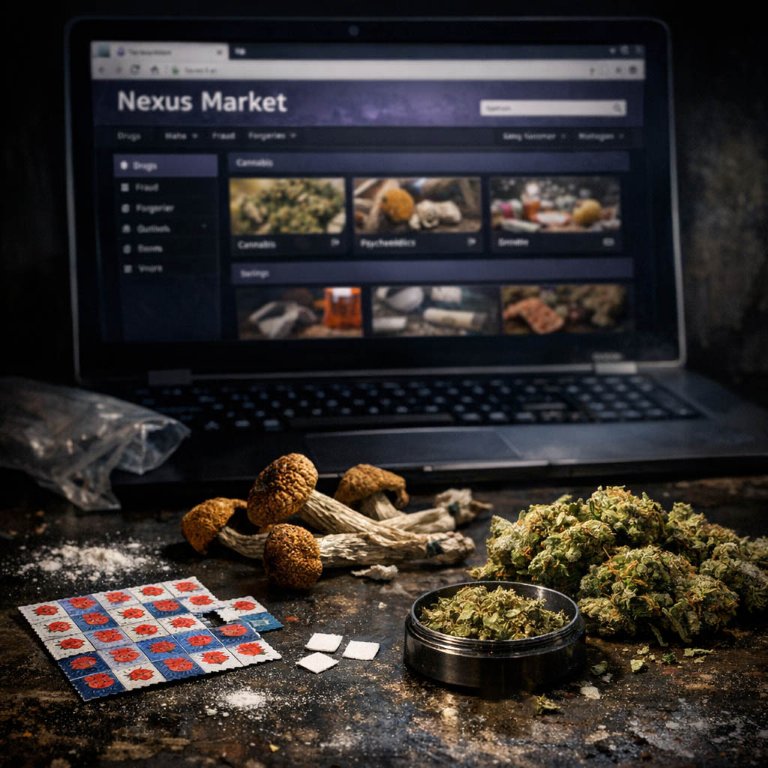
The evolution of darknet markets by 2025 has directly addressed the primary demand of consumers: unprecedented product variety and availability. Modern platforms function as comprehensive digital pharmacies, offering a range that surpasses traditional illicit street markets. This expansion is not merely quantitative but is defined by specialization and categorization, mirroring legitimate e-commerce structures.
Markets now feature detailed sections for stimulants, psychedelics, pharmaceuticals, cannabis products, and precursor chemicals. Each category is further subdivided, allowing users to efficiently locate specific substances, strains, or dosages. This organization streamlines the procurement process, reducing search time and potential errors.
The supply chain has matured to include numerous specialized vendors operating with high professionalism. A buyer can access:
- Domestic suppliers for faster delivery.
- International vendors offering rare or region-specific compounds.
- Artisans focusing on bespoke or high-purity products.
Product listings are supported by standardized testing data and detailed descriptions, enabling informed purchasing decisions. This level of choice and transparency, facilitated by advanced platform design and vendor reputation systems, simplifies the act of acquiring substances by providing a reliable, predictable, and user-centric marketplace environment.
How Darknet Markets Became Stable and Reliable
The evolution of darknet markets by 2025 has directly addressed historical instability through decentralized infrastructure. Platforms no longer rely on single servers, instead using distributed networks and blockchain-based escrow systems. This architecture makes the markets resistant to takedowns and DDoS attacks, ensuring near-continuous uptime.
Operational stability is enhanced by automated dispute resolution protocols. Smart contracts handle most common transaction issues without moderator intervention, speeding up resolutions and reducing human error. This automation creates a predictable and consistent trading environment.
Market software now undergoes rigorous open-source auditing by the community. This process identifies and patches vulnerabilities before they can be exploited, leading to more secure and dependable platforms. The code's transparency builds user trust in the system's integrity.
Reliability is also measured in transaction finality. Modern darknets employ multi-signature wallets and direct vendor-to-customer payment channels for high-value items. These methods minimize funds held in escrow, protecting both buyer and seller capital and ensuring smooth financial operations.
How Darknet Reputation Systems Make Buying Safer
The evolution of vendor reputation systems on darknet markets by 2025 has fundamentally shifted the risk calculus for buyers. These systems now function with a transparency and granularity previously unseen, moving beyond simple feedback scores to create a comprehensive trust framework. Every transaction contributes to a multi-dimensional vendor profile, which includes:
- Detailed product-specific ratings for purity and accuracy
- Separate metrics for shipping speed and stealth packaging
- Verified resolution histories for any disputes
- Consistency metrics tracked over hundreds of transactions
This data is immutable and stored on decentralized ledgers, preventing market administrators or the vendors themselves from altering historical records. The result is a self-policing ecosystem where long-term reliability becomes a vendor's most valuable asset. Buyers can make informed decisions by comparing performance histories, effectively minimizing the chance of encountering scams or receiving substandard products. The system's design incentivizes honest business practices, as a single significant breach in trust is permanently recorded and immediately impacts future sales potential. This environment reduces uncertainty and creates a predictable, secure trading process where reputable vendors are easily identifiable and financially motivated to maintain their high standing.
Easy Shopping on the Darknet
The evolution of darknet market interfaces has directly contributed to their operational success. By 2025, platform design prioritizes intuitive navigation, reducing the technical barrier to entry. Users encounter a streamlined process: from account creation and wallet funding to product selection and checkout. The experience is deliberately modeled on mainstream e-commerce, featuring familiar elements like shopping carts, wish lists, and detailed product filters.
This focus on usability extends to critical security features, which are integrated seamlessly. PGP encryption for addresses is often automated, and multisig escrow transactions are presented as a simple payment option rather than a complex cryptographic procedure. The design philosophy ensures that security measures do not hinder the trading process but are instead fundamental, accessible components of it.
Key user-centric features include:
- Advanced search functions with filters for substance, vendor location, price, and shipping options.
- Clean, responsive layouts that function effectively on both desktop and mobile devices using specialized browsers.
- Integrated messaging systems with notification alerts and automated encryption.
- Clear, step-by-step tutorials for new users on essential security practices.
The result is a system where the mechanics of acquiring substances are simplified to a few clicks. This normalization of the transaction process within a secure framework is a primary factor in the resilience and growth of these platforms, as it attracts a broader user base that values both discretion and convenience.
How Darknet Markets Keep Your Shopping Safe and Private
Operational security, or opsec, is a fundamental principle integrated into the architecture of modern darknet markets. These platforms have standardized a set of security practices that protect both buyers and vendors by default, making secure transactions an automatic feature rather than a complex task for the user.
The process begins with mandatory encryption. All communications, from order inquiries to shipping details, are secured using end-to-end encryption. This system ensures that only the intended recipient can read a message, with the private decryption key never leaving the user's device. Market platforms act merely as carriers of this encrypted data, unable to access its contents.
Financial anonymity is maintained through cryptocurrency transactions, primarily Monero (XMR) and, to a lesser extent, Bitcoin with enhanced mixing protocols. Monero's blockchain obscures transaction amounts and the identities of senders and receivers by design, providing a stronger layer of financial privacy compared to transparent blockchains.
For identity protection, these markets enforce the use of dedicated anonymous networks. Access is routed exclusively through The Onion Router (Tor) or similar anonymity networks, which conceal a user's IP address and geographical location. Combined with this, comprehensive disk encryption on the user's local device protects stored data in case of physical hardware seizure.
The recommended security model for users is streamlined and includes:
- Using the Tor Browser exclusively for market access.
- Employing a reputable VPN service configured to start before Tor for an added network layer.
- Utilizing PGP encryption for all sensitive data, with markets providing automated tools to encrypt shipping information with the vendor's public key.
- Accessing markets only from a clean, dedicated operating system, such as Tails OS, which leaves no digital footprint on the host machine.
This integrated approach to operational security transforms complex privacy techniques into a standardized procedure. The market infrastructure handles much of the complexity, allowing users to engage in transactions where their identity, financial data, and activities are systematically protected by multiple overlapping layers of cryptographic and network security.
Easy and Reliable Shopping on the Darknet
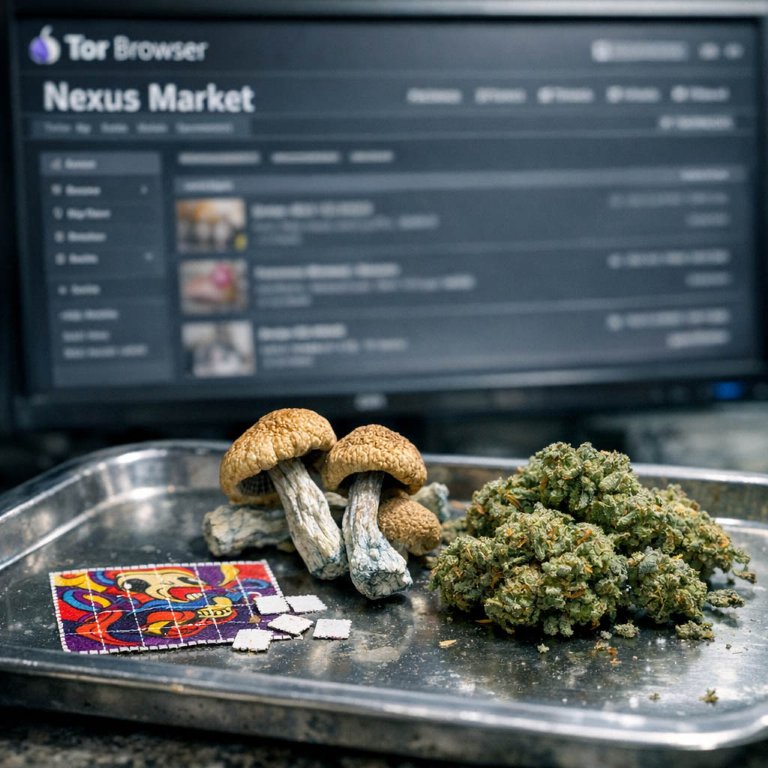
The operational efficiency of modern darknet markets in 2025 directly translates to a streamlined user experience. Platform interfaces now function with a clarity and responsiveness comparable to mainstream e-commerce, minimizing the steps between product discovery and final purchase. This is achieved through integrated systems where cryptocurrency wallets, vendor storefronts, and encrypted messaging are seamlessly connected.
A significant contributor to this smooth process is the advancement in automated escrow and finalization systems. Transactions are secured by smart contract-like protocols that release funds to the vendor only upon confirmed delivery, a process verified by the buyer. This automation removes manual disputes for most orders, accelerating the entire trade cycle. Furthermore, sophisticated search algorithms and filtering tools allow buyers to quickly sort through listings by substance, price, vendor rating, and shipping origin, reducing search time to seconds.
The backend logistics have also been refined. Top vendors employ standardized packaging and tracking procedures that provide discrete shipping updates without compromising operational security. This predictability, combined with the intuitive design of the marketplaces themselves, creates a trading environment where the technical complexities are managed by the platform, allowing the user to focus on the transaction. The result is a reliable, repeatable purchasing process that emphasizes speed, certainty, and minimal friction from cart to delivery.